Kneel Before Zod
Thoughts on a sculpture from Superman II that is now in my living room, and on Superman more broadly.

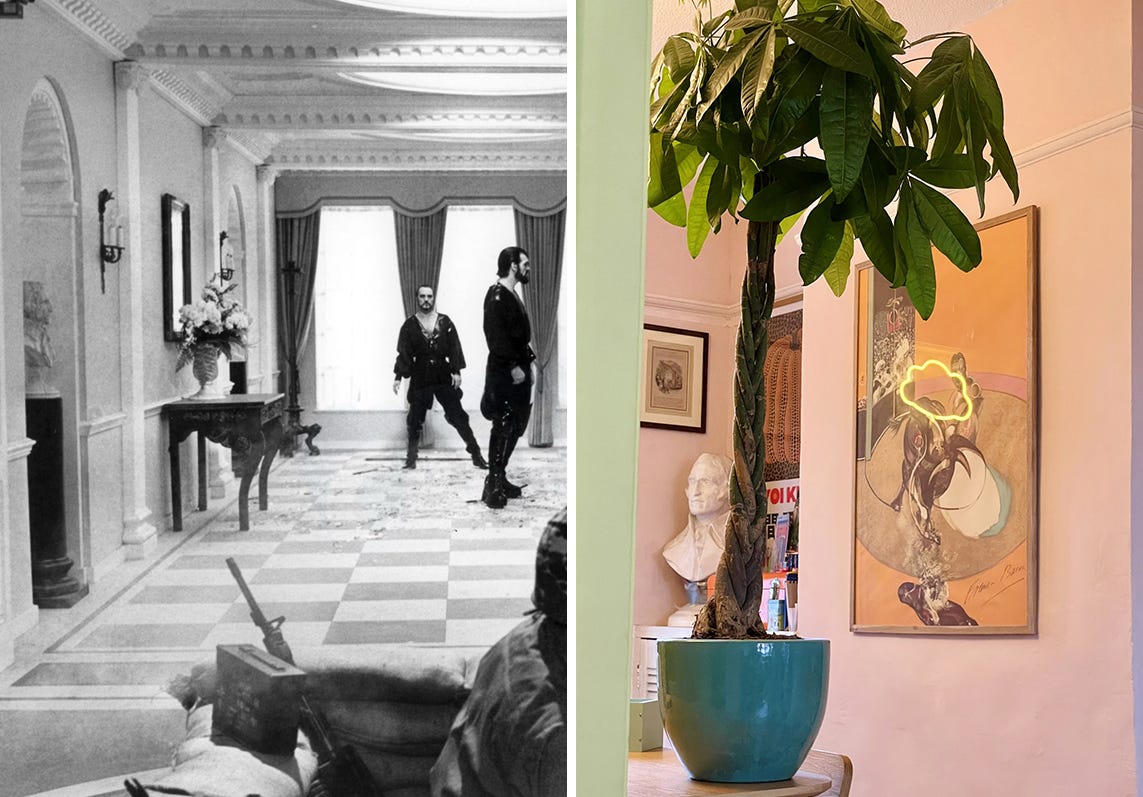
In my living room is a white plaster bust of George Washington. It is an object that exists in real and fictional worlds, once part of a story and now taking up a small space in my home. Though out of place, it is rarely noticed by guests. It is the kind of object that seems to explain itself, even when it does not.
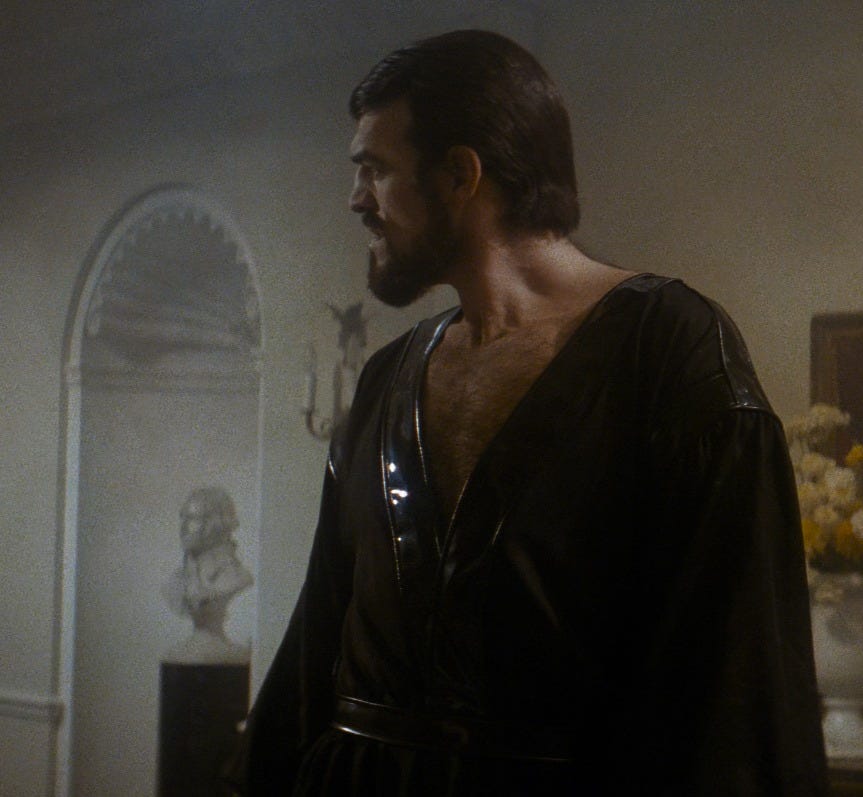
The bust appears at a pivotal moment in Superman II (1980/2006), a film that is as much about the pull between desire and duty as it is about capes and Kryptonite. Superman gives up his powers for love—because of course he does; Lois Lane is the only real person in the room—before needing to claw them back when three camp-with-conviction villains attempt to take control of Earth, beginning with their seizing of the White House, where the bust appears during a battle outside the Oval Office.
As a kid, these villains, General Zod, Ursa, and Non, struck me as phenomenally cool, moving through scenes in high-gloss black ensembles like they had already won, appearing to have stepped off the runway at a totalitarian fashion week. The film has one foot in pulp and the other in pathos, and in the background of a significant scene, that plaster bust of George Washington watches it unfold. The bust plays a role as a witness to the collapse of American authority, wearing the same blank expression that can now be found in my living room.
Due to the tensions of Hollywood’s struggle to settle artistic vision and commercial interests, there are two versions of Superman II. Both are outstanding, both are flawed. The film's production was turbulent, with director Richard Donner leading the initial shoot, working on both Superman: The Movie (1978) and its sequel simultaneously, with Christopher Reeve as the Superman. Donner’s vision for the films was as a serious work of modern mythology, and he approached the material with reverence. This is reflected in the tone of his footage, which is less slapstick than the version that was first released, directed by Richard Lester. Donner was fired from the project after completing 75 percent of the film.
Lester was brought in to finish the film, and to secure a director's credit, he had to reshoot most of the movie. This led to the creation of the two very different cuts of Superman II: the one I saw on TV as a kid, and the Donner Cut, which did not become available until 2006. The Donner Cut was a cinematic reclamation, with much of it feeling newly minted at the time despite being filmed in 1977. There’s a humanism to the heroics that undercuts any smugness, letting you feel the rush of flight and the bother of falling in love.
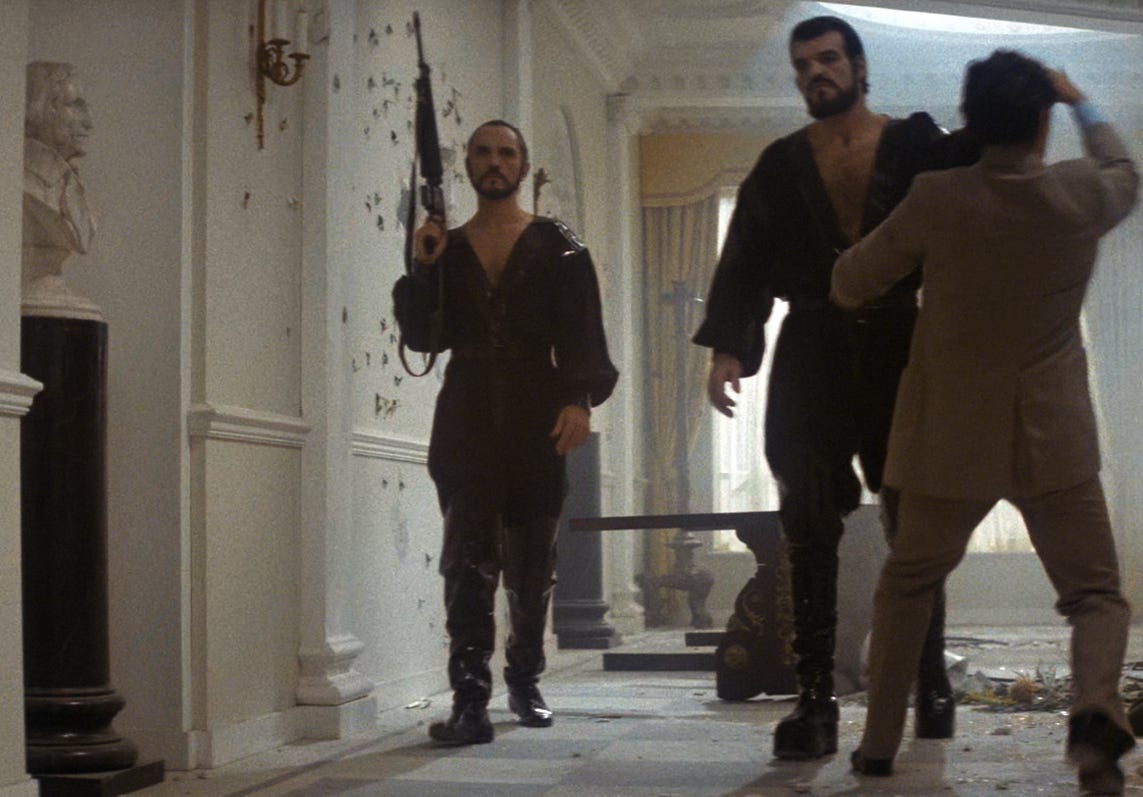
The bust appears as a set dressing during General Zod’s invasion in both versions of the film. Washington, the near-mythic founder of the U.S., is included as a nod to the dream of democratic leadership; Zod, is there to demand obedience while popping off rounds from an ArmaLite AR-10. In the Donner cut, the scene is more extensive—marines firing hopelessly at invaders who barely register the effort. Zod strolls through the gunfire pleased, while Ursa and Non dismantle the republic with brute force and a flick of the wrist. Under siege, the bust, along with another of President Eisenhower, struck by gunfire, becomes a kind of tragic chorus, as mute witnesses to forced surrender.
To finish the takeover, after moving into the Oval Office, Zod gives the dramatically despotic line: ‘Kneel before Zod’. It is a stylized command of control, drained of nuance and inflated for the sake of authoritarian spectacle.
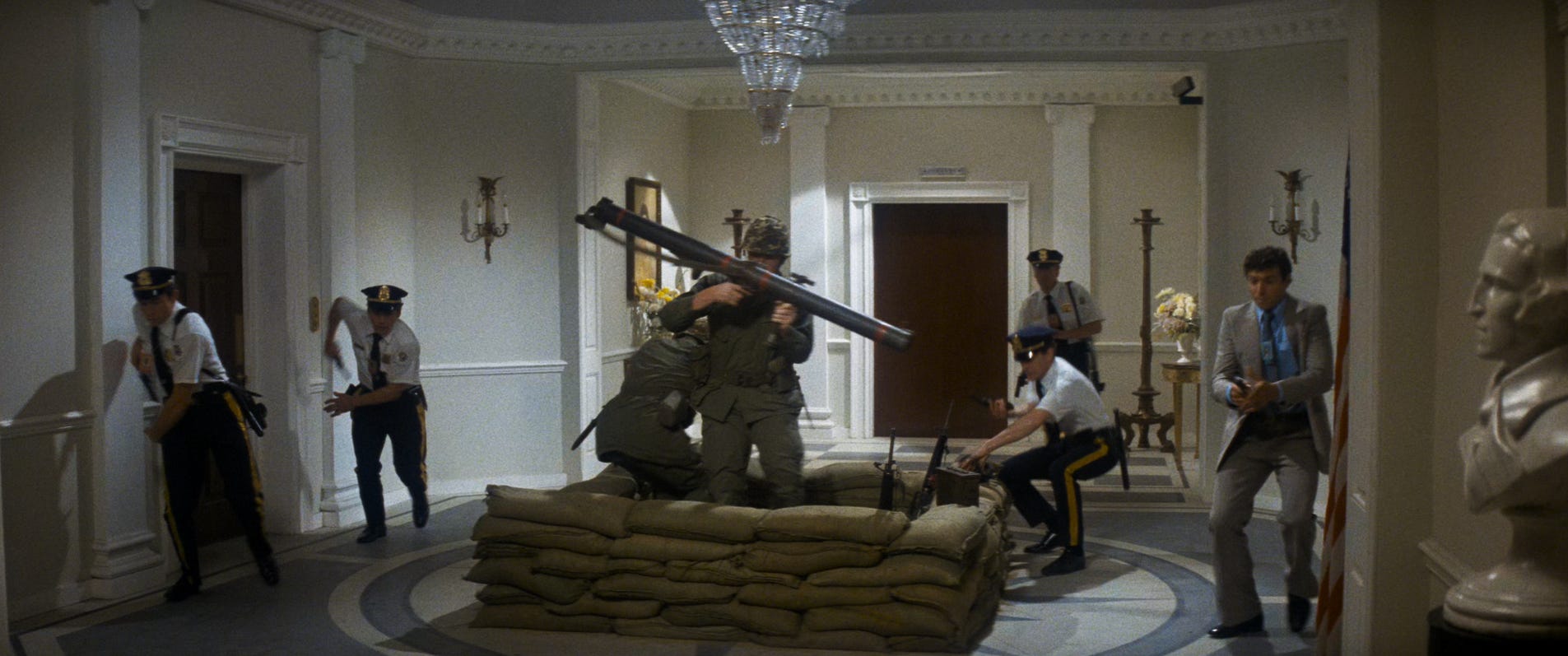
Tom Mankiewicz, the film’s creative consultant, cited the technical demands of the scene as an example of the challenges faced during production. According to him, the producers had overly ambitious expectations about how quickly and cheaply scenes for Superman and Superman II could be filmed, often underestimating the complexity involved.
“The super villains break into the White House, where they come through the ceiling and the marines are firing at them, I think that was scheduled for half a day and Dick said, “Are you outta your mind? First of all, if they fly through wrong the first time, we will have to put the dome back, this is two days, even in television it’s two days, you got a gun battle, machine gun fire, we got stuff flying all over the place, you can’t schedule this for a half a day!”. It was like that every day”. - Tom Mankiewicz
You can see the version of the scene from the Donner Cut here, Zod’s smirk as he fires a gun for the first time is a highlight –
The bust is plaster with a little paint. Its appearance in the scene changes nothing about it, except everything. To own it is to hold a fragment of a tailored reality, a piece of a temporary world that was once imagined, staged and performed. Such objects carry the residue of narrative, production and memory. I see the bust daily and it comes with a continued spark of recognition and an emotional jolt. Beneath that thrill is something quieter—a longing, maybe—for when the film meant something slightly more. For me, that was in an often damp, permanently undecorated living room on a council estate in Hull, watching on a rented CRT TV with my brother.
The bust is not just a portal to the film; it is a portal to the sensation of watching it, of being absorbed in one world while living in another, far removed from where I am now. Props and set dressings like this are not passive. They shape atmosphere, carry symbolic weight and influence how stories are told, watched and remembered. When an object lives beyond its original scene and set, it enters a space where memory and narrative intermingle. Collecting these things, I think, is as much about nostalgia as it is about continuity. It is a way of keeping close the stories that once made us feel something. Some objects carry stories; others ask questions. In the material and conceptual spaces they occupy, they invite us to consider not just what we remember, but how.
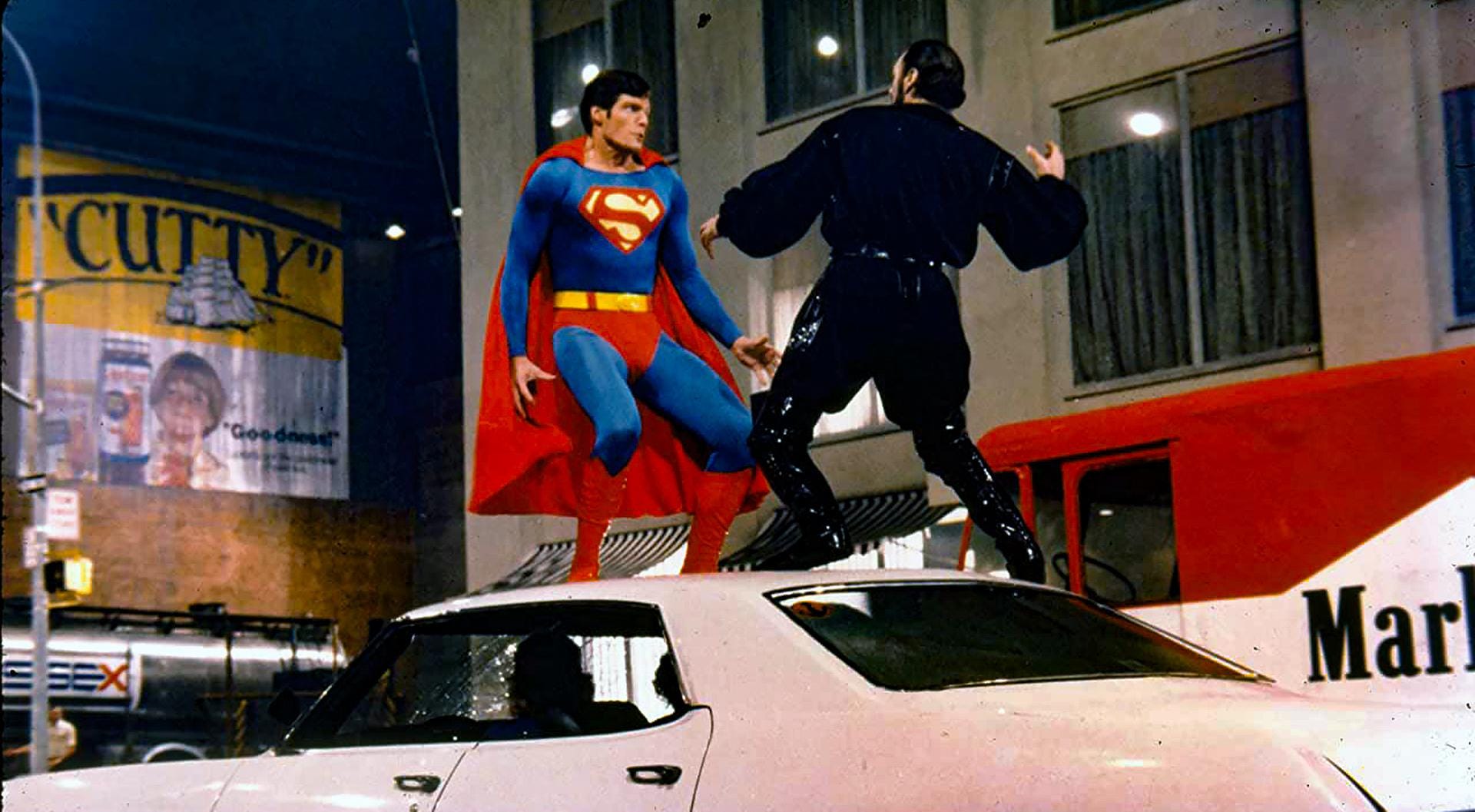
Superman has always been as much a philosophical proposition as a character. He embodies the fantasy of moral clarity, and in Superman II, that fantasy begins to crack. The film is not just about flying and fighting; it is about the burden of goodness, expressed through a choice between personal desire and a greater responsibility. Superman gives up his powers for love, which is either the most human thing he has ever done or the beginning of his moral unravelling. Around this, the film flirts with different ethical frameworks: utilitarianism asks what will produce the greatest good, deontology insists on duty regardless of outcome, and virtue ethics centres on character and flourishing. Superman, in his best moments, seems to hover between these poles. Can someone so invulnerable truly understand what it means to suffer? The film doesn’t answer that—it simply lets him hesitate.
Superman II is not just a story about heroism; it is a story about the cost of trying to be good when goodness is no longer simple, and when even the most powerful being alive can not be sure what the right thing is. These tensions colour every gesture and hesitation we see from him on the screen, turning his actions into questions. The film stages the conflict between ideals and uncertainty, the allure of withdrawal and the cost of return.
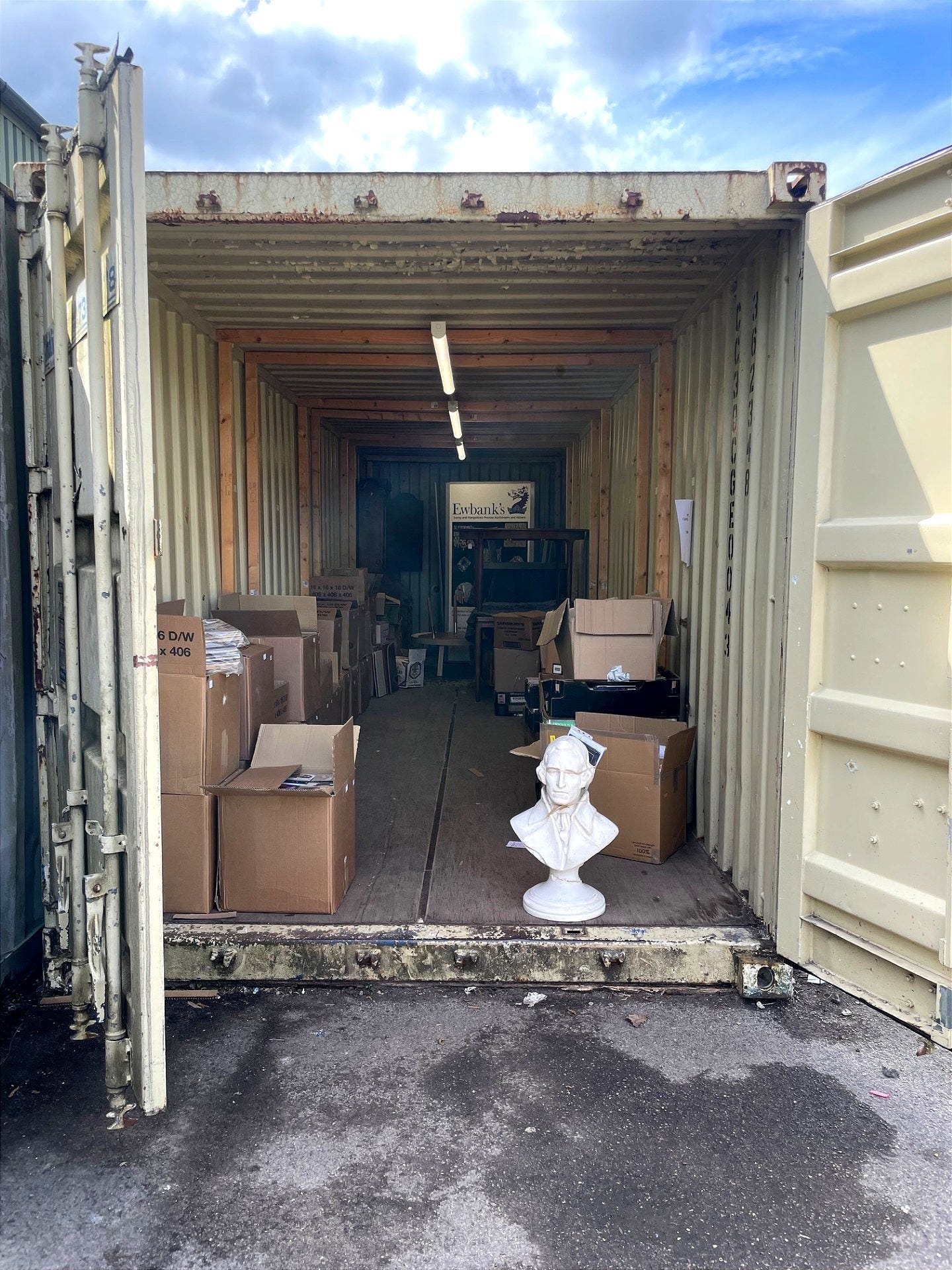
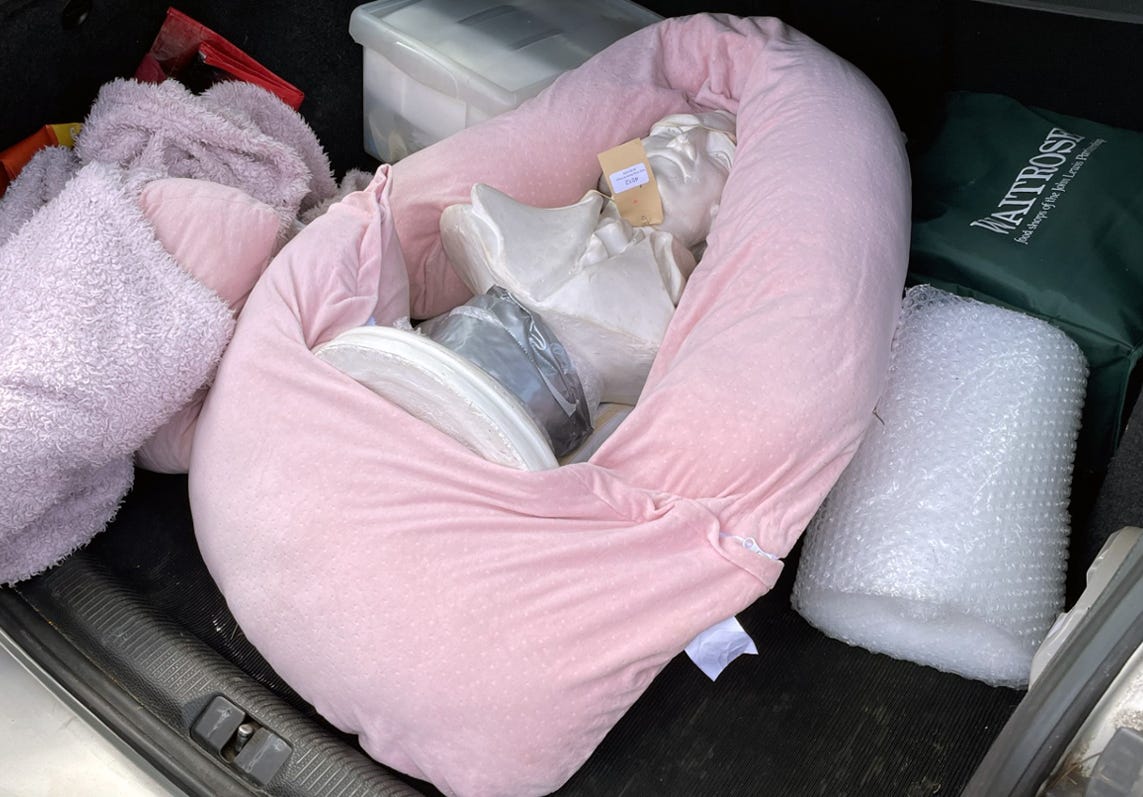
Filming took place in the UK, on the soundstages of Pinewood Studios during the summer of 1977. Richard Donner hung signs reading “Verisimilitude” in every production office, with props and set design expected to reflect that ethos. He worked closely with John Barry (of Star Wars fame) to create environments that felt lived-in and symbolically resonant, with the White House interiors dressed to heighten the ideological stakes of Zod’s takeover. From ideological backdrop to personal possession, I am unsure of the bust’s journey between filming and its arrival at an auction house in Woking, where a friend and I collected it a few months ago. It has picked up some damage over the past 48 years, and the faux-marble patina visible in the film is now only present in certain areas.
Sculpturally speaking, the bust is relatively young. In cinema terms, it first appeared onscreen around the midpoint of the art form’s history, after the silents had faded and before digital took over, when movies still relied on real-world sets and textures.
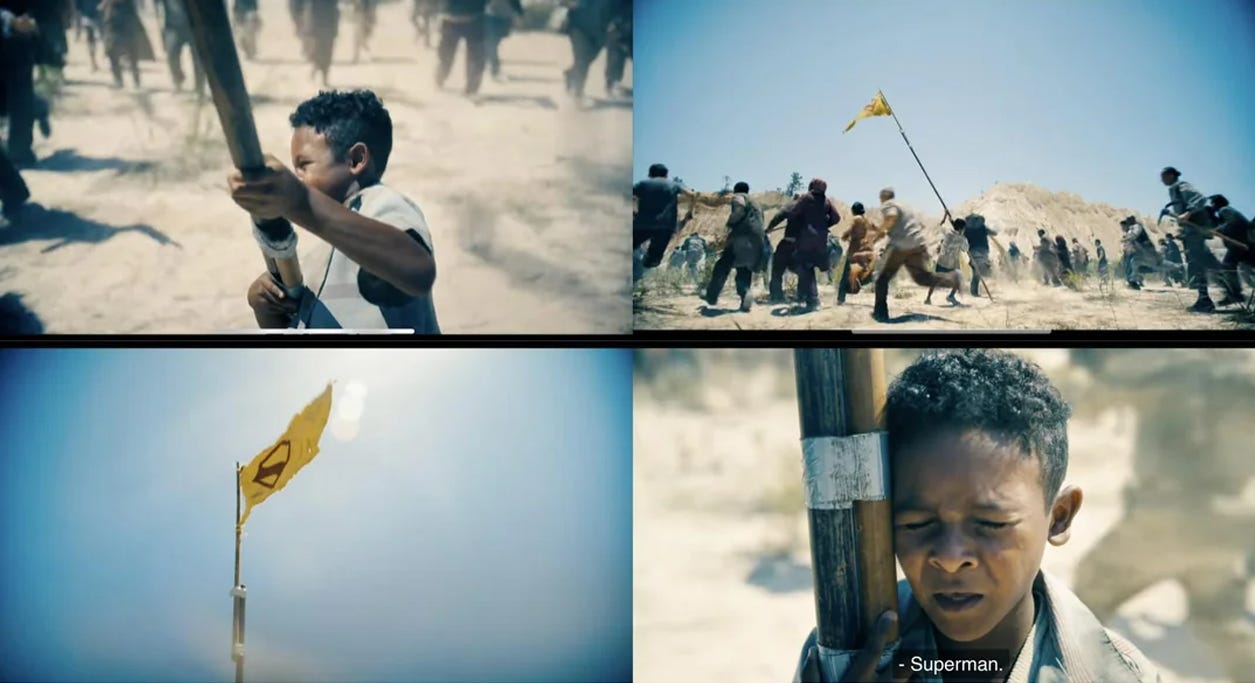
It is said that Superman has reflected the world’s anxieties and hopes for most of the past century. A new film, James Gunn’s Superman (2025), is currently doing well at the box office, and while the bar has not been set high in recent years, this one clears it with style. Donner’s originals still stand as the gold standard, sincere and mythic, but the new film earns its place among the best. It is bold enough to show Superman intervening in a foreign conflict without U.S. approval, guided not by orders but by conscience. There are scenes that echo real-world detention centres and state violence. Of course, some critics have called it woke, which now seems to mean too empathetic for comfort.
Dean Cain, who played Superman in Lois & Clark: The New Adventures of Superman (1993–97), has responded by announcing plans to volunteer with ICE, citing patriotism and duty, following his criticisms of the new film’s framing of Superman as an immigrant. But wait, Superman was created by Jewish immigrants during a time of rising fascism—not as a mascot, but as a moral proposition. Cain’s seeming admiration for current law-and-order absolutism feels like an echo of the kind of power Superman was meant to resist. One wonders whether Cain’s Superman, faced with the authoritarian tone of Zod’s approach, would kneel out of fear or volunteer out of familiarity. There are strange and stark inversions at play in current Superman-politics. Superman is a mirror, but what we see depends on where we are standing.
Found you through Threads!
Loved it. I had never seen that scene or film before either - brilliant!